
 English
 中文简体
中文简体 русский
 Español
 Français
Usine de moules pour récipients alimentaires à paroi mince : production à grande vitesse pour l'industrie de l'emballage
Le Usine de moules pour récipients alimentaires à paroi mince est devenu un partenaire essentiel pour les fabricants d'emballages qui recherchent une production efficace et en grand volume de contenants jetables légers pour les secteurs de la restauration et de la vente au détail. Cette installation spécialisée conçoit et fabrique des moules qui produisent des récipients dont les épaisseurs de paroi varient généralement de 0,3 à 0,8 millimètres, permettant ainsi d'importantes économies de matériaux et des temps de cycle rapides. Des données récentes de l'industrie de l'emballage indiquent que la technologie de moulage à parois minces a gagné une part de marché substantielle en raison de sa rentabilité, de sa empreinte environnementale réduite et de sa capacité à répondre à la demande croissante de solutions d'emballage durables dans l'industrie alimentaire mondiale.
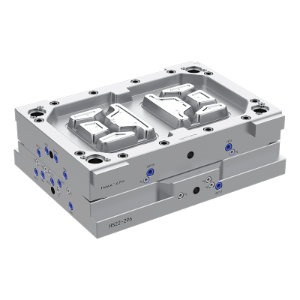
Conception de moules et ingénierie des parois minces
Le thin wall food container mould factory employs specialized engineering techniques to design moulds that produce lightweight containers with consistent wall thickness and dimensional stability. The mould design incorporates hot runner systems that deliver molten plastic directly to the cavity, small material waste and reducing cycle times. The cavity and core are precision-machined from high-grade steel such as S136 or 2316, which provides outstanding wear resistance and corrosion protection for extended production runs. The mould design includes optimized gating and venting systems that ensure proper filling and air evacuation during the injection process, preventing defects such as burn marks or short shots. The thin wall design requires careful consideration of flow characteristics and cooling rates.
Système de refroidissement et technologie de moule à pile
Le thin wall food container mould factory integrates advanced cooling systems into its mould designs to achieve rapid cycle times and consistent part quality. The cooling channels are strategically positioned to provide uniform heat transfer across the entire cavity surface, which is essential for maintaining dimensional stability and preventing warpage that could affect the container's sealing performance. The cooling system is designed for rapid heat removal, with optimized coolant flow rates and channel diameters that improve heat transfer efficiency.
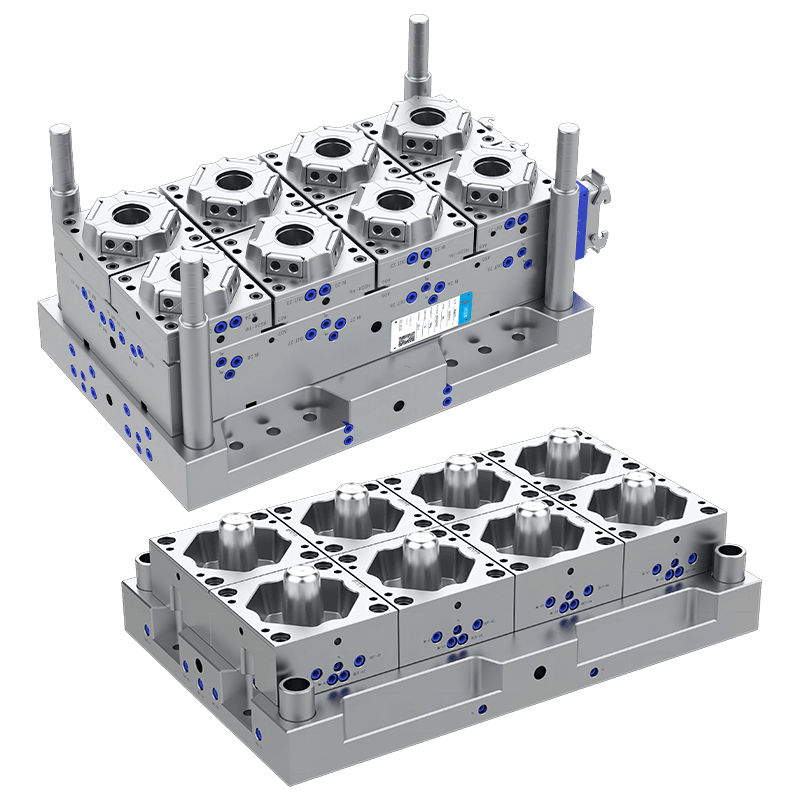
Le factory also offers stack mould configurations that further increase production efficiency. Stack moulds feature two or more parting lines, allowing multiple layers of containers to be produced in each cycle. The stack mould incorporates a central hot runner system that distributes plastic to all layers, with the moving platen allowing the mould to open at multiple points for part ejection. The stack mould design includes:
Lignes de séparation multiples pour une production en couches ;
- Distribution centrale des canaux chauds pour un remplissage équilibré ;
- Systèmes d'éjection synchronisés pour toutes les couches ;
- Conception compacte pour optimiser la taille des machines.
Précision de fabrication et contrôle qualité
Le thin wall food container mould factory employs advanced machining processes to achieve the tight tolerances required for high-quality thin wall moulds. The manufacturing process includes CNC milling of the mould base, EDM for cavity finishing, wire cutting for core and cavity details, and polishing for high-quality surface finish. The mould components are machined to precise tolerances, typically within ±0.01 millimeters, with regular in-process inspections using coordinate measuring machines to verify dimensional accuracy.
Le factory implements rigorous quality control procedures throughout the manufacturing process. Material inspection verifies steel quality and hardness. Dimensional inspection confirms all machined components meet specifications. Assembly verification ensures proper fit and alignment of all components. Mould testing on injection molding machines verifies cycle time, part quality, and overall performance. The factory maintains quality management systems that comply with relevant industry standards.
Efficacité de production et polyvalence des applications
Le thin wall food container mould factory's products serve a wide range of packaging applications across the food industry. The moulds produce containers for fresh produce, including clamshells and trays. They manufacture deli containers for prepared foods and salads. They produce dairy containers such as yogurt cups and sour cream tubs. They also produce ready-meal trays and microwaveable food packaging.
Le factory's moulds are designed for use with a range of thermoplastic materials, including polypropylene for heat resistance and clarity, polyethylene for flexibility and moisture barrier properties, and polystyrene for rigidity and transparency. The mould design must account for each material's flow characteristics and shrinkage behavior. The factory's technical expertise enables it to recommend the ideal material and mould design for each application.
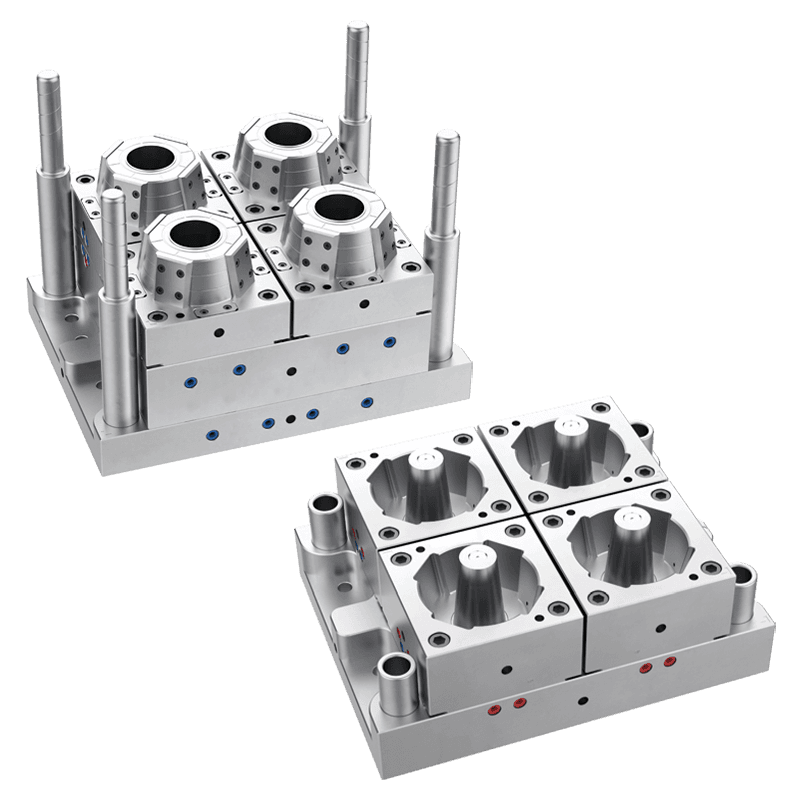
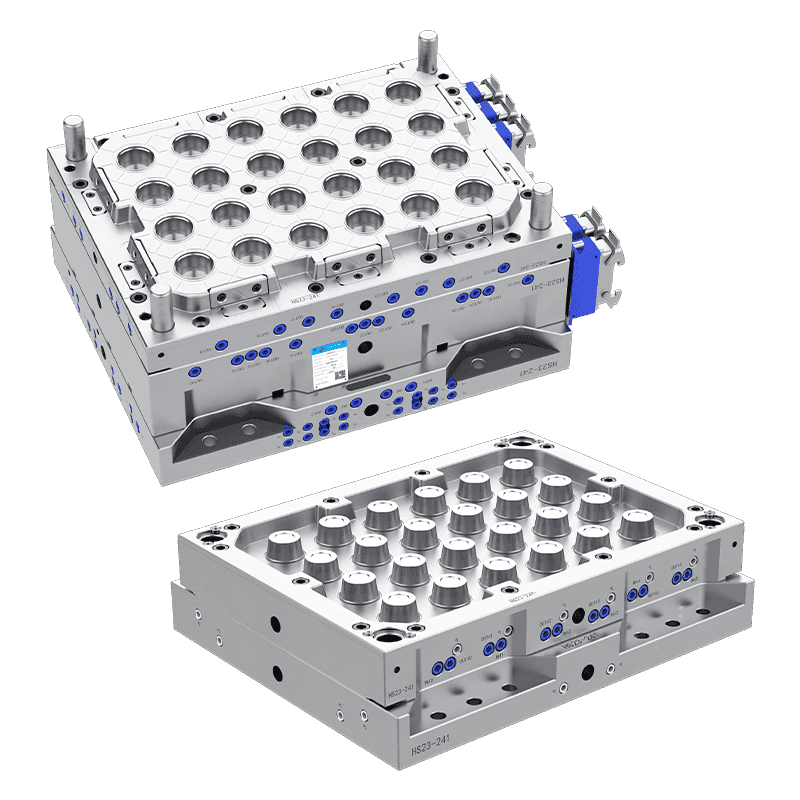
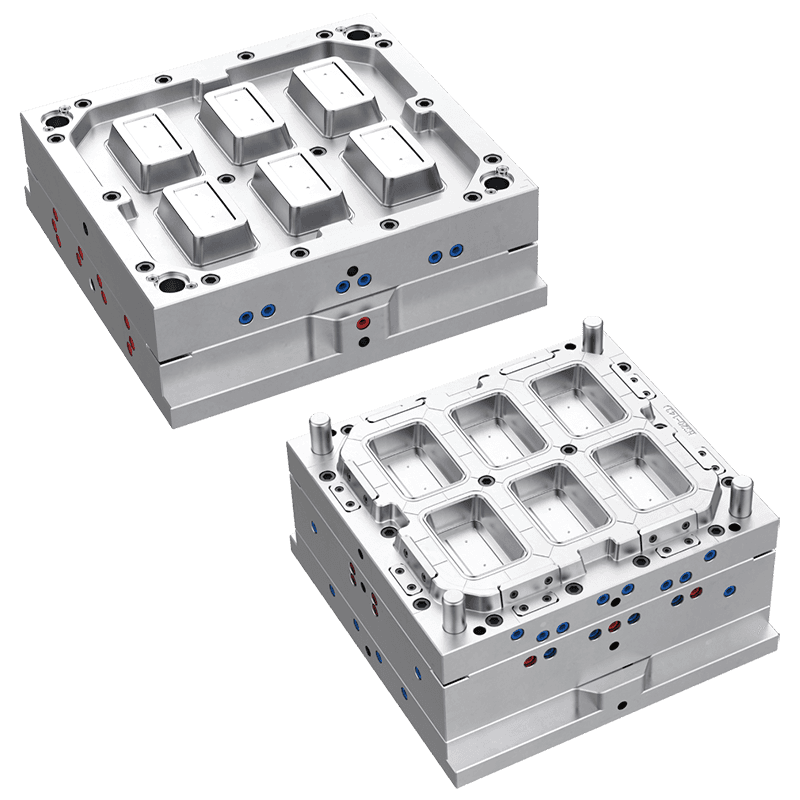
Recommandations de produits associés
Contactez-nous
E-mail: [email protected]; Ou remplissez le formulaire de contact ci-dessous.

Yongkang Huashun Mold Co., Ltd. est une entreprise technologique spécialisée dans la production de moules d'injection à paroi mince.
 E-mail:
  Téléphone: +86-18067655796
  Tél.: +86-0579-87137609
 Adresse: N° 218, route Shangpu, zone de développement économique de Yongkang, ville de Jinhua, province du Zhejiang, Chine


